I’m constantly surprised by the number of quilters who tell me that they don’t use steam when pressing their quilt blocks.
When I press them (no pun intended) on WHY they avoid steam, they usually tell me one of two things:
- Their iron spits brown stuff whenever they fill it with water (yikes!), or
- They've been told that steam will warp their seams.
Huh.
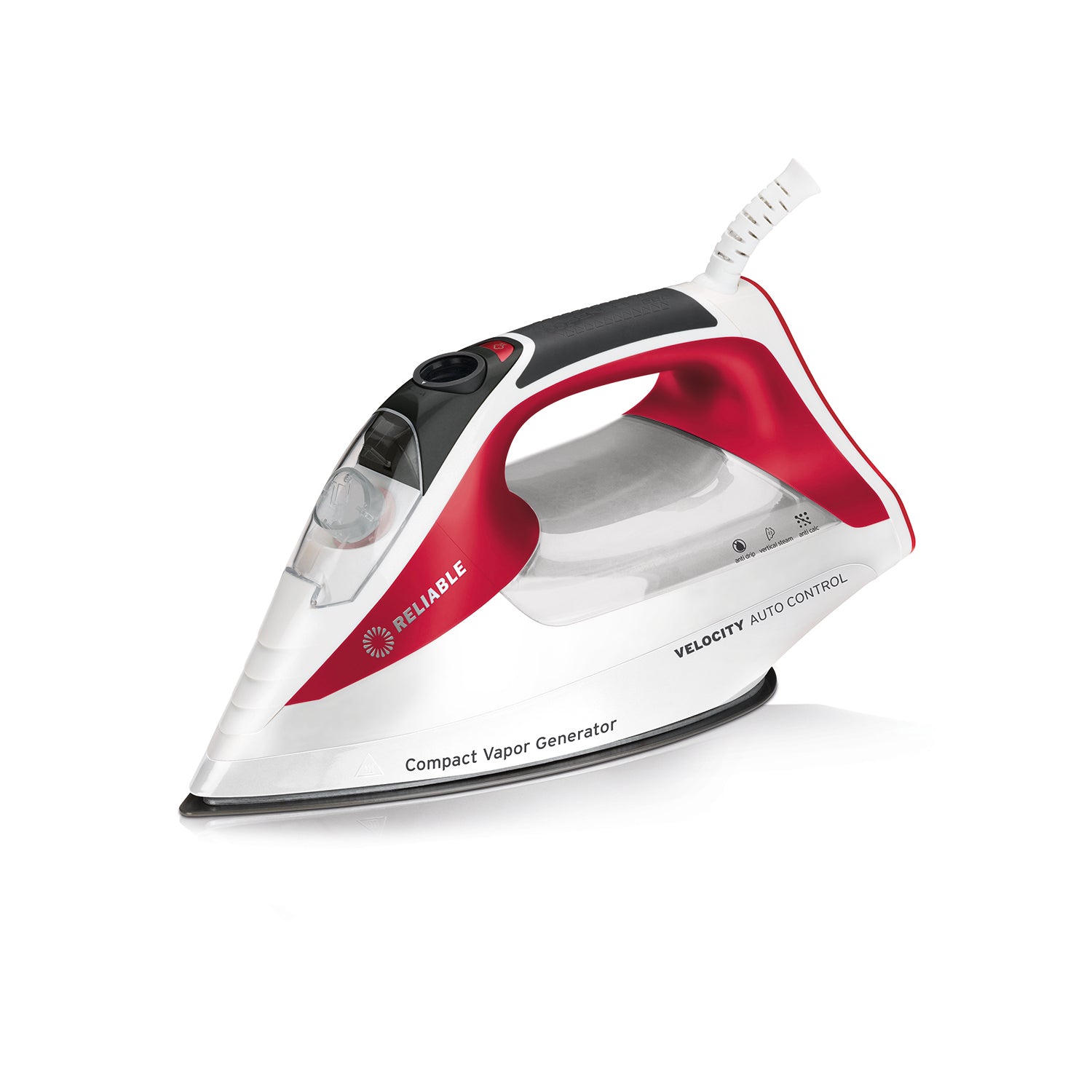
First of all, I believe you should be able to add water to your iron withOUT it leaking all over your project (which is why I use a Reliable brand iron), and second, I use steam to press my blocks all the time, and they’re definitely not warped.
Let me show you how!
I'm going to walk you through the steps to make a simple patchwork quilt block, and I'll show you my method for super straight, super FLAT seams. It's easier than you think!
|
|
Step 1 Start with 2 strips of dark fabric that measure 2.5” x 10.5”, and two strips of light fabric that measure 2.5” x 10.5”. Since we’re going to be flipping the fabric around, I prefer to use non-directional prints (patterns that look good in any direction) for this project. |
 |
Step 2 Sew a light and dark fabric together along the long edge using a ¼” seam allowance. Repeat with the other pair of fabric. |
 |
Step 3 Press the seams towards the dark fabric. |

To make sure my steams stay nice and straight (and don't warp), I like to follow the below steps when pressing ANY seam.
|
|
Step 4 Lay the fabric on your pressing board with the fabric you'd like to press towards on top ( in this case, the dark fabric). |
|
|
Step 5 Without engaging the steam on your iron, press the recently sewn seam. I do this by adjusting my grip on the handle of my iron, making sure I’m not touching the black rubber sensor. Using a dry iron will ensure that your seam stays straight and flat. |
|
|
Step 6 Roll back the dark fabric so that the light fabric is visible. Run the sharp edge of your iron’s sole plate along the seam, and gently push the dark fabric so that it is lying flat on the pressing board. Having a pressing board with a slightly grippy fabric (like this one) will ensure that the light fabric stays in place while you push over the dark fabric. |
|
|
Step 7 Once the dark fabric is lying flat on the pressing board, NOW engage the steam on your iron. Yours may have a steam trigger, but my Velocity 270IR has a sensor built into the handle. |


Work your way across the fabric making sure that every part has been steamed (taking care not to drag the iron across the fabric, but rather lifting it from location to location). Using steam at this point will result in a super flat block that will stay nice and straight.
Leave the recently-pressed fabric to cool on the pressing board while you repeat the steps with the second pair of fabric.
|
|
Step 8 You will now have two sets of fabric that are pressed towards the dark side. |
|
|
Step 9 Now that you’ve got your two pairs of fabric, sew them together so the pattern alternates light - dark - light - dark. Once again, sew along the long edge using a scant ¼” seam allowance. |
|
|
Step 10 Follow the directions above to press the seam to the dark side (use no steam when setting the stitches, use the sharp edge of your iron to flip over the fabric, once it’s in place, use steam to make it super flat). |


|
|
Step 11 You should have a strip set that measures approximately 10.5” x 9”. Now we need to chop this up into some smaller units!
Use a rotary cutter and acrylic ruler to sub-cut the strip set into units that measure 2.5” x 9.0”. You should have a little extra on each side - that was planned so that you’d have some really precise results. |
|
|
Step 12 Flip two of the units around so that you end up with a checkerboard pattern, alternating light and dark fabric. Note: At this point, you could choose to have a block with either a light or a dark fabric in the top left hand corner. Either one is fine, but if you’re making an entire quilt out of these blocks, you’ll want to make sure that all of your blocks are created the same way. |
|
|
Step 13 Next, sew all the four strips together along their long edge using a ¼” seam. |
|
|
Step 14 When all of your units are sewn together, the last thing to do is to press all the seams in one direction. Use the same method as above (use no steam when setting the stitches, use the sharp edge of your iron to flip over the fabric, once it’s in place, use steam to make it super flat) to ensure nice crisp seams. |
|
|
Step 15 Ta-da! You should have a nice flat 16-patch block that measures 9.0” x 9.0”! |


If you wanted to make an entire quilt of these blocks, you would simply need to rotate your blocks in every other row. That way, the direction of the seams will be alternating, and the blocks will nest together perfectly!
To make a nice big throw size of this quilt (that measures 63” x 72”), you would need:
56 total blocks
- 112 light strips of fabric that measure 2.5” x 10.5”
- 112 strips of dark fabric that measure 2.5” x 10.5”
And since you can cut up a fat quarter and it will yield 14 strips, that means that you could make the throw sized quilt with only 8 light fat quarters and 8 dark fat quarters. But personally, I would mix it up and make mine a little scrappier. Dig into your scrap bins and have a blast!